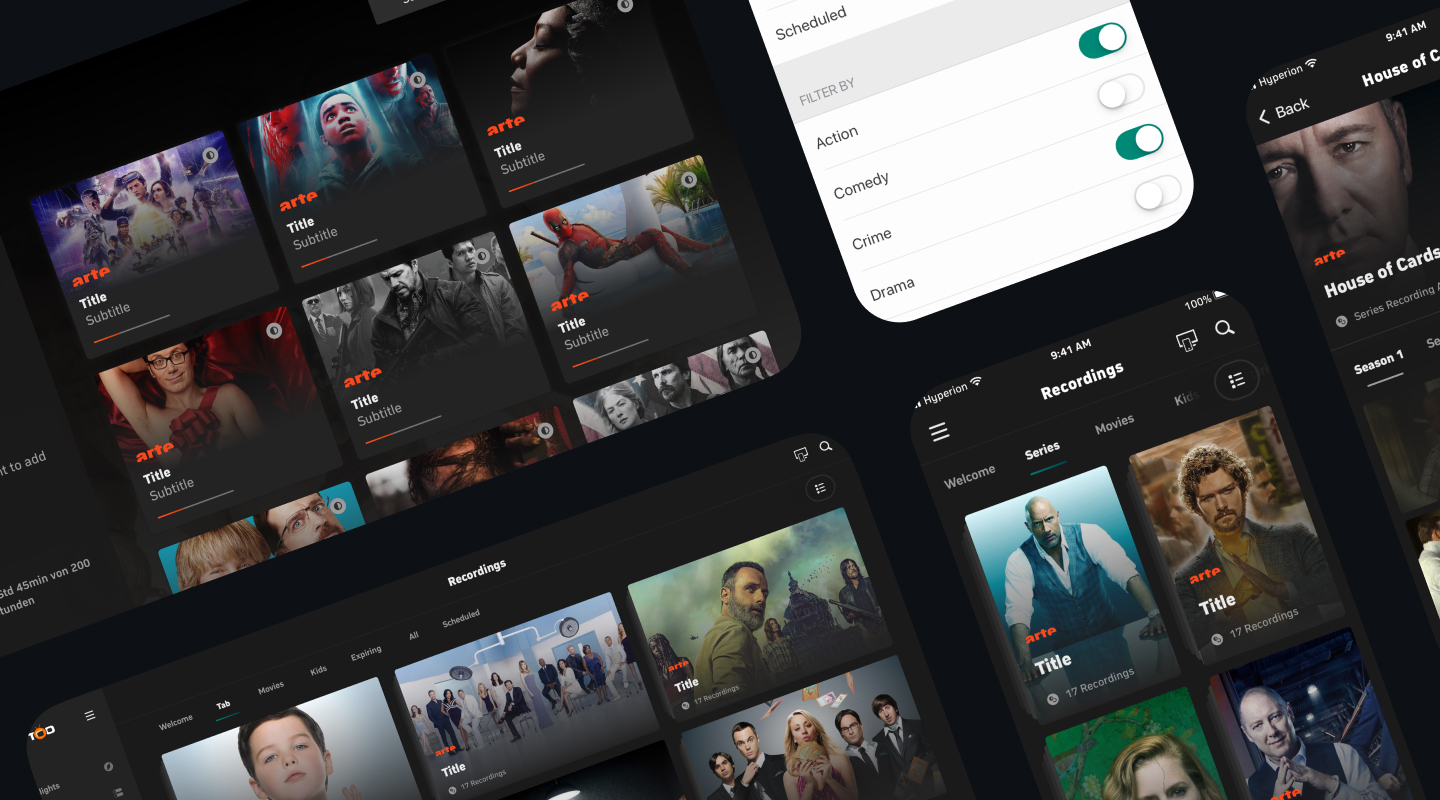
Zattoo's Recordings was a killer feature that had lost its magic: untouched since 2015 and built seven different ways across seven platforms. I led the redesign that gave it one consistent, findable home again.
The whole story
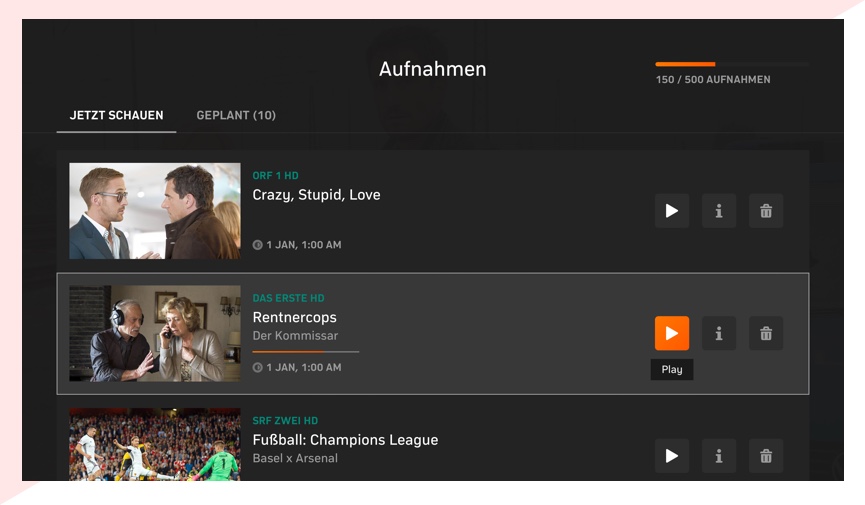
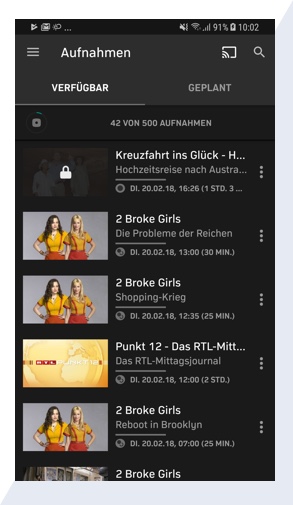
Designed in 2012 and untouched since 2015, Recordings had fallen behind: up to 500 recordings on a single page, and seven different implementations across seven platforms.
Pulling together knowledge scattered across departments showed the bottleneck wasn't recording a show — it was managing and finding what you'd already recorded.
A dedicated home for TV Series, one consistent experience on every platform, select-all/delete-all, and a smarter default sort with manual filters — shaped through a GV Design Sprint and tested before a line of code shipped.
+6% average duration of watched recordings per eligible user, seven fragmented builds unified into one, and — per Customer Support — complaints turning into praise.
A killer feature that lost its magic
Wait — TV Recordings, like old-school VCR but on your phone? Yep. And Smart TV, tablet, computer and many more. Zattoo is a TV platform for IP-based transmission of live channels and video-on-demand across a wide range of devices, and Recordings — record a live show, watch it anytime, like TiVo — is a core distinction of the Premium product.
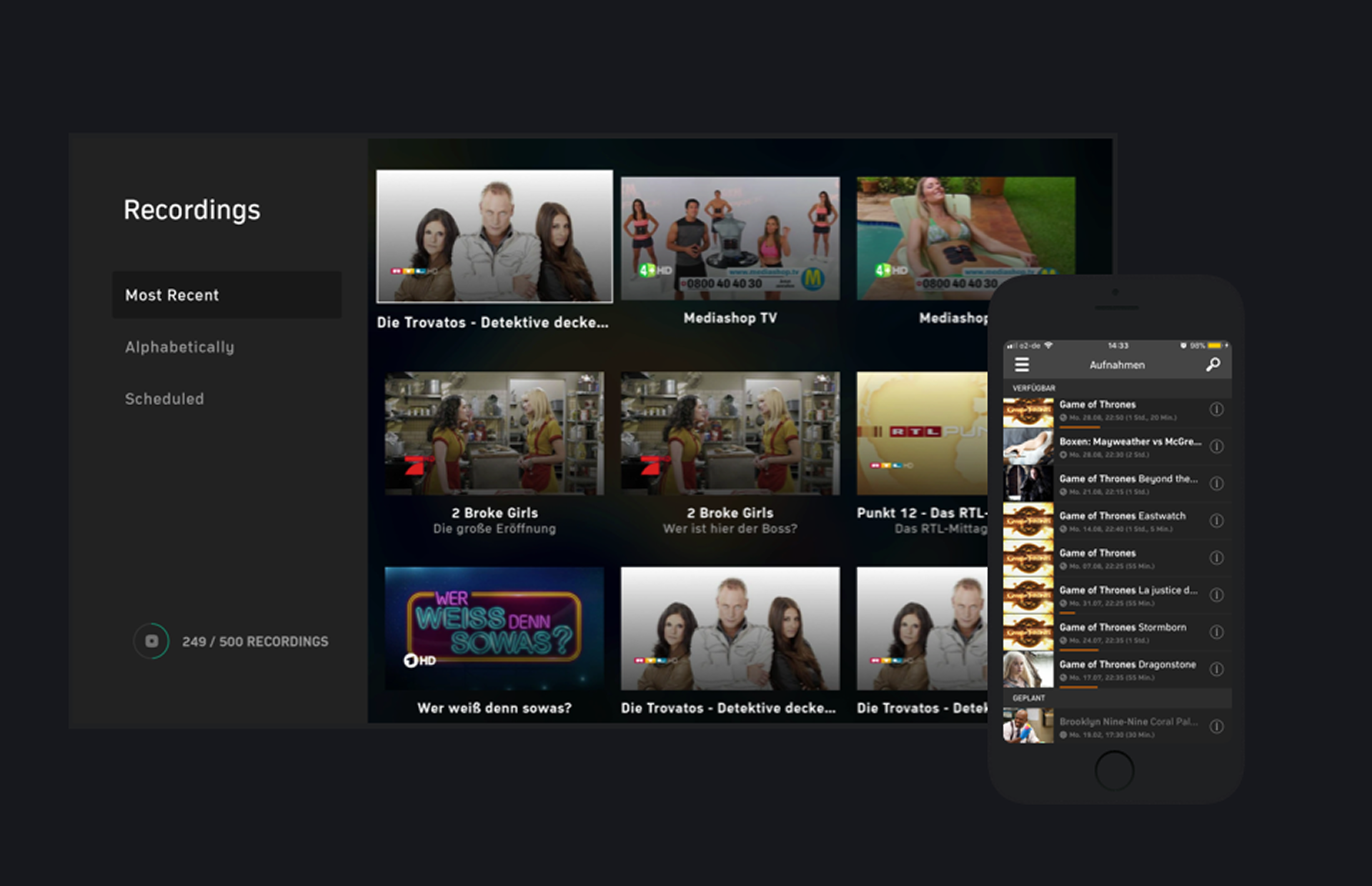
Designed in 2012, by 2019 the feature had gone from killer feature to an example of inconsistent product development.
Competitors pulled ahead while Zattoo's recordings fell behind the standard.
"We have been waiting for the series recording function for years!!"
Seven different implementations of the same feature, on seven different platforms.
A puzzle with scattered pieces
Knowledge about how recordings were actually used was scattered across departments. My first responsibility was to gather it and make sure the team reviewed it together before we started designing anything.
11% of users have 50–500 recordings, 81% have 1–9, and 7% have 100–500.
Monthly requests from users about the possibility to delete multiple recordings at once.
In usability testing, participants found it easy to record a show, but didn't understand the iconography or the status changes.
Movies are the most recorded type of show, but Series are the most watched content.
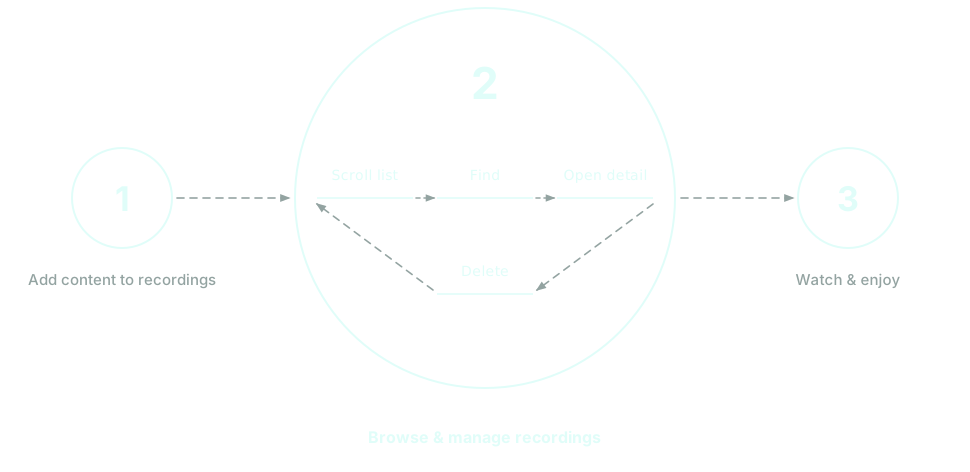
Recordings is a complex feature. To make a real impact, we had to break it down and identify the most important pain points. We decided to focus on what happens after the user records a show: the management and find-ability of it. I also worked with Product and Business Intelligence to set up a dashboard tracking the relevant KPIs going forward.
Users "forget" about their recorded content because we offer a limited way of browsing and finding it.
Time watching recordings
Users can't watch serial content seamlessly because we don't group episodes & seasons of a show together.
Time watching series content
It's difficult to delete unwanted recordings, so users don't stack as many as they could, and power users get frustrated.
Number of recordings per user
The bottleneck wasn't recording a show, it was finding it back later.
Sprint, prototype, test, iterate
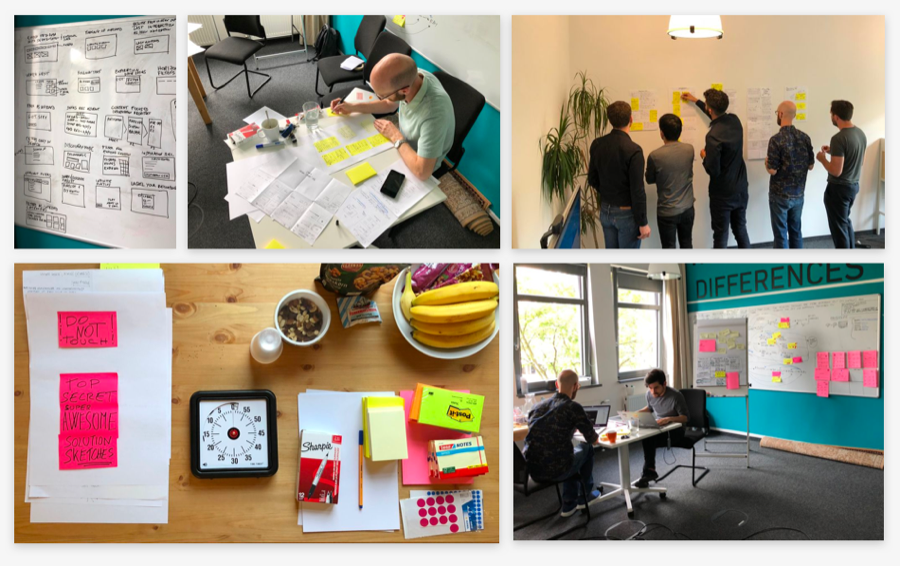
The redesign of Recordings was an opportunity to introduce GV Design Sprint workshops at Zattoo. It was my responsibility to organise and lead the sprint with the relevant business stakeholders, turning three scattered hypotheses into one aligned direction.
Once the concept for mobile and web was ready, we built a prototype in InVision and tested it during the Design Sprint. For TV, I paired up with a software engineer to build an interactive prototype. The goals were:
The findings were wording and minor usability issues. We iterated and got the green light to build.
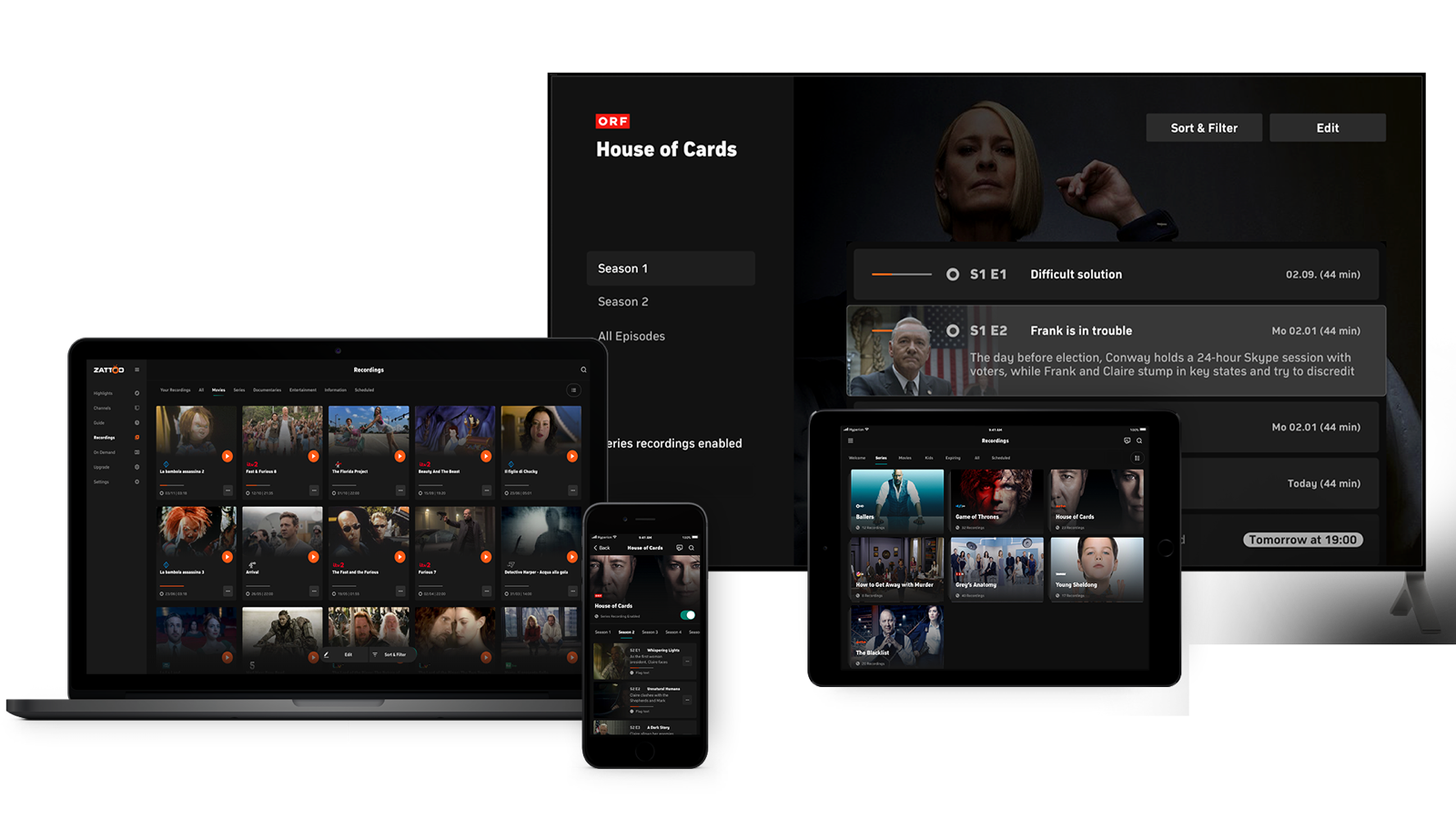
7 platforms, one experience
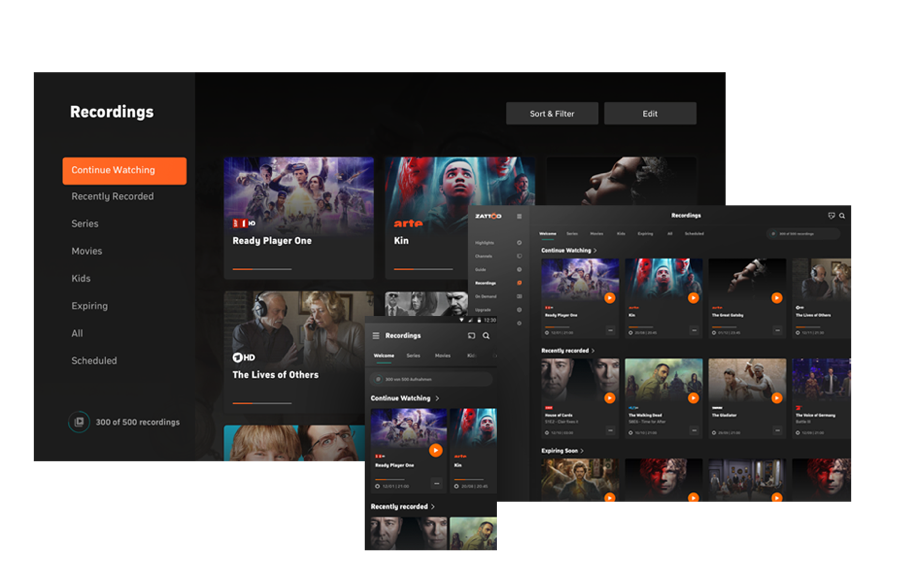
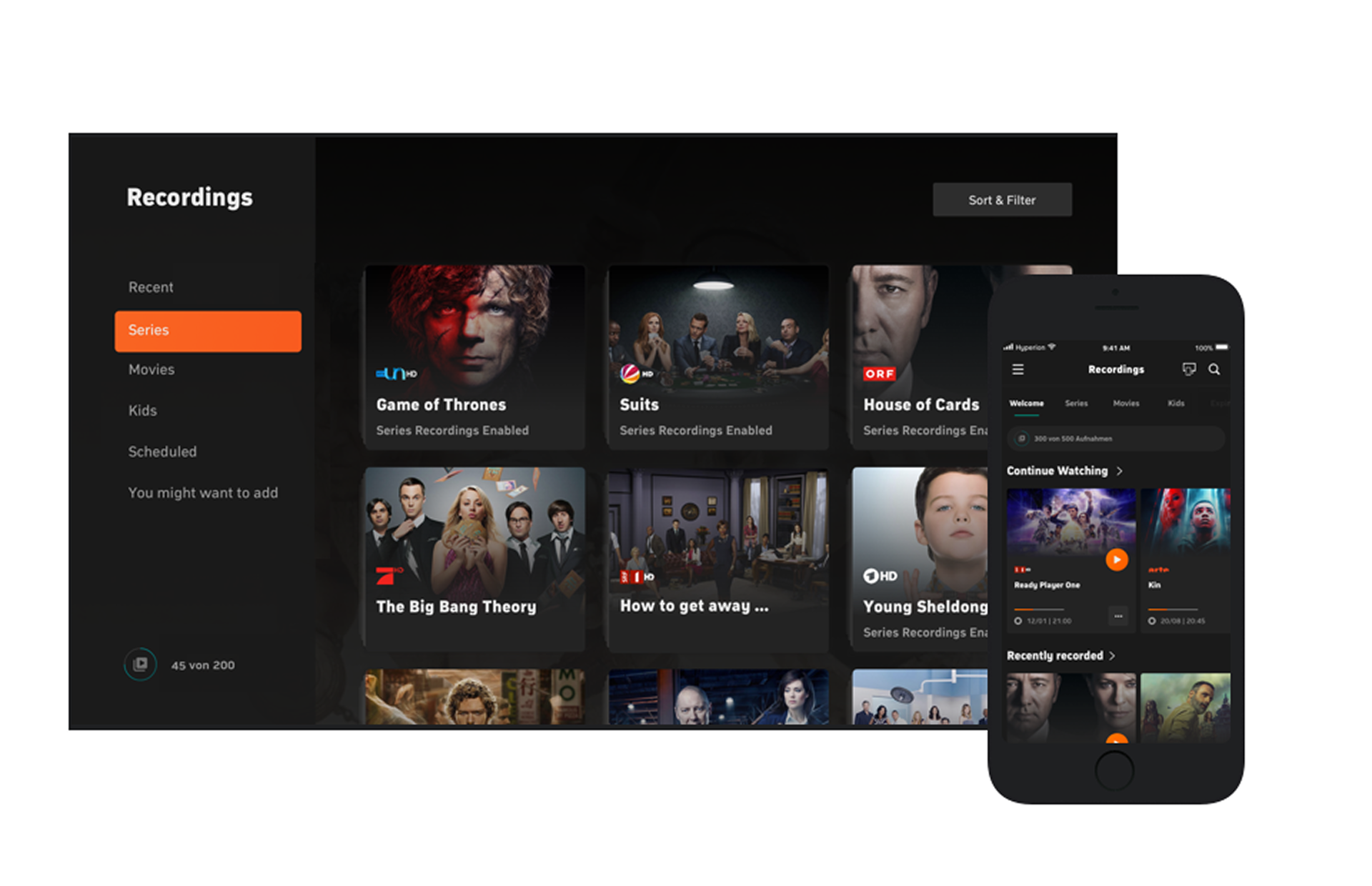
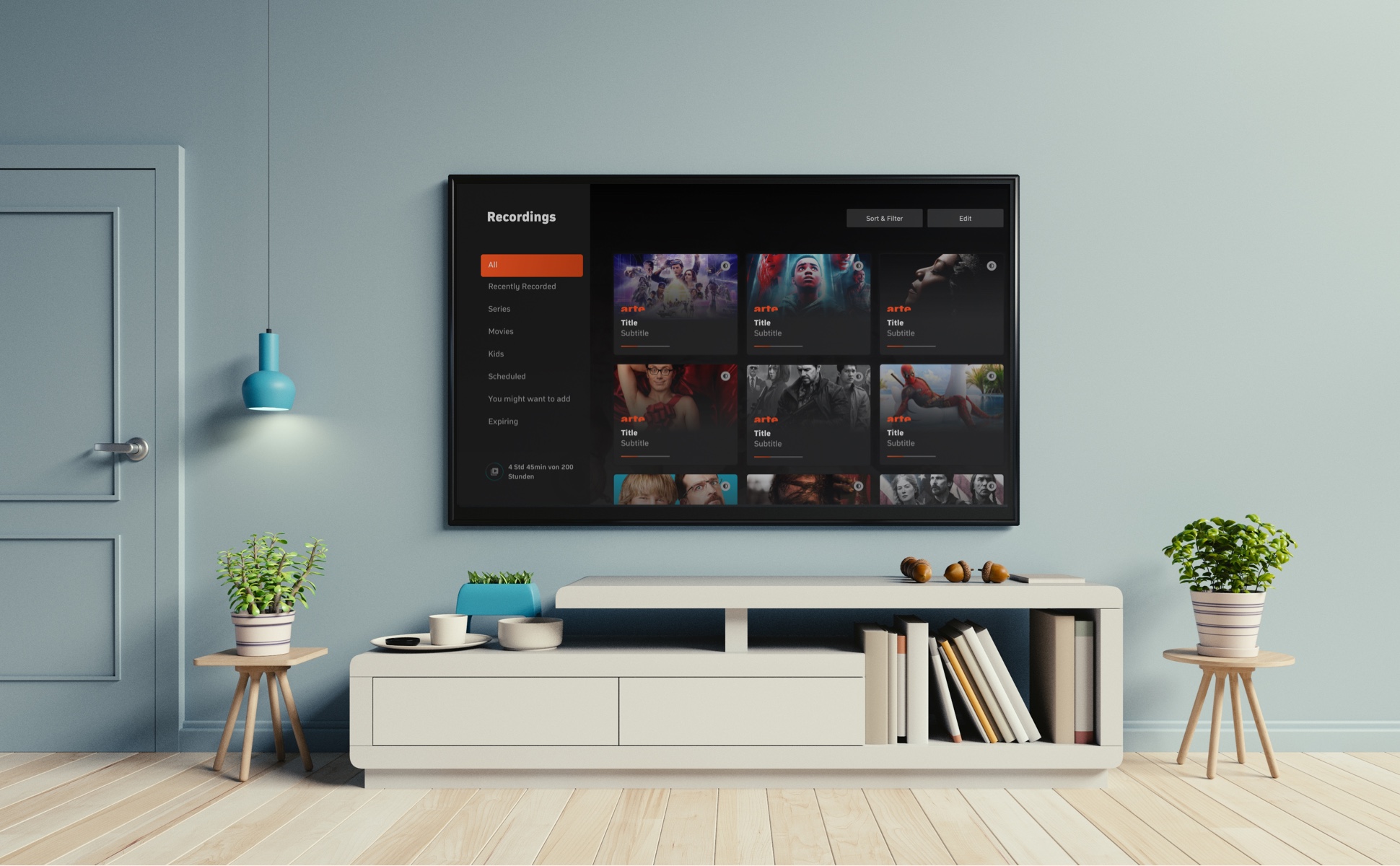
Recordings combines a polished look and feel with a clear, familiar interface.
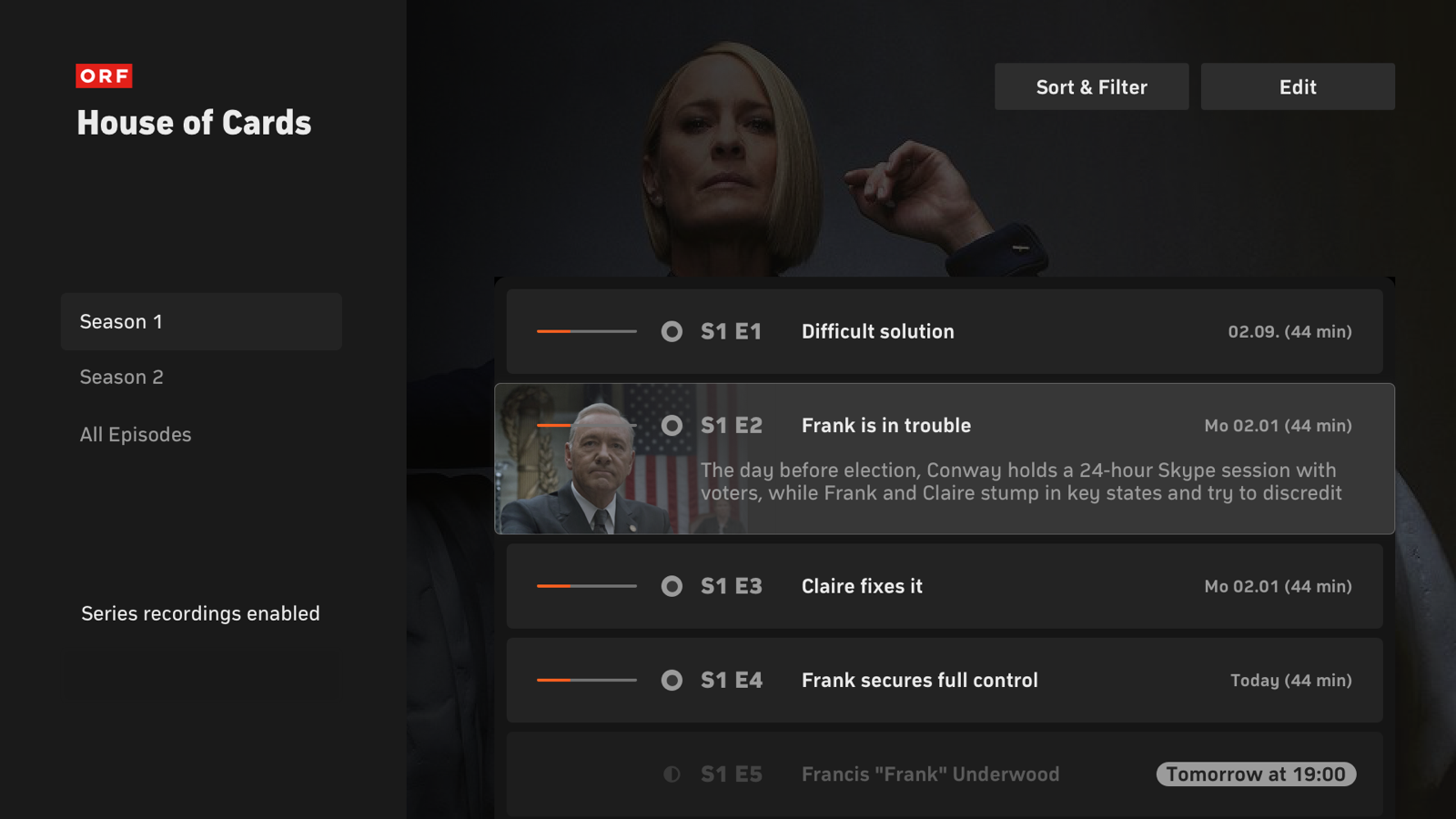
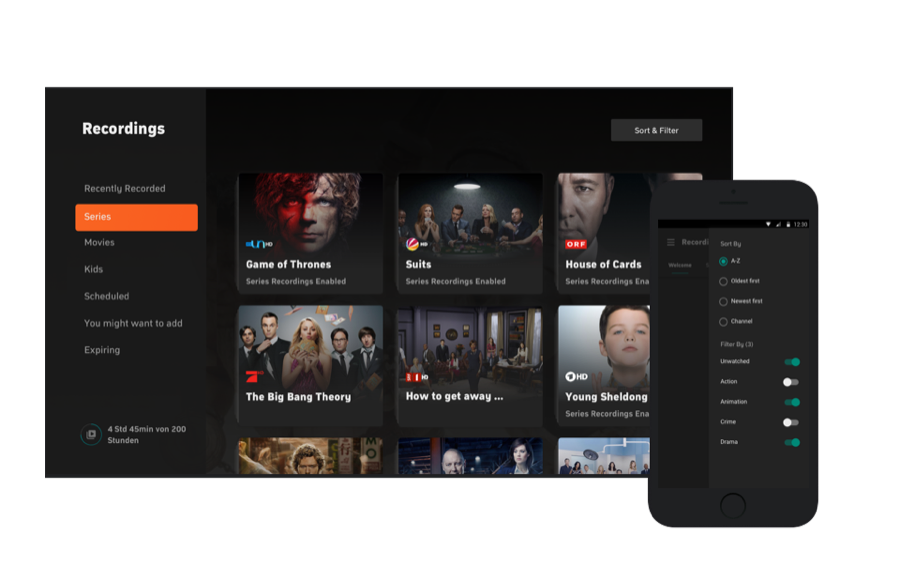
Recorded TV Series now have a dedicated category, and each Series has its own page.
On Series pages, users can browse episodes by season, delete multiple episodes at once, and reorganize episodes.
Before the redesign, there were seven different implementations of Recordings on seven different platforms.
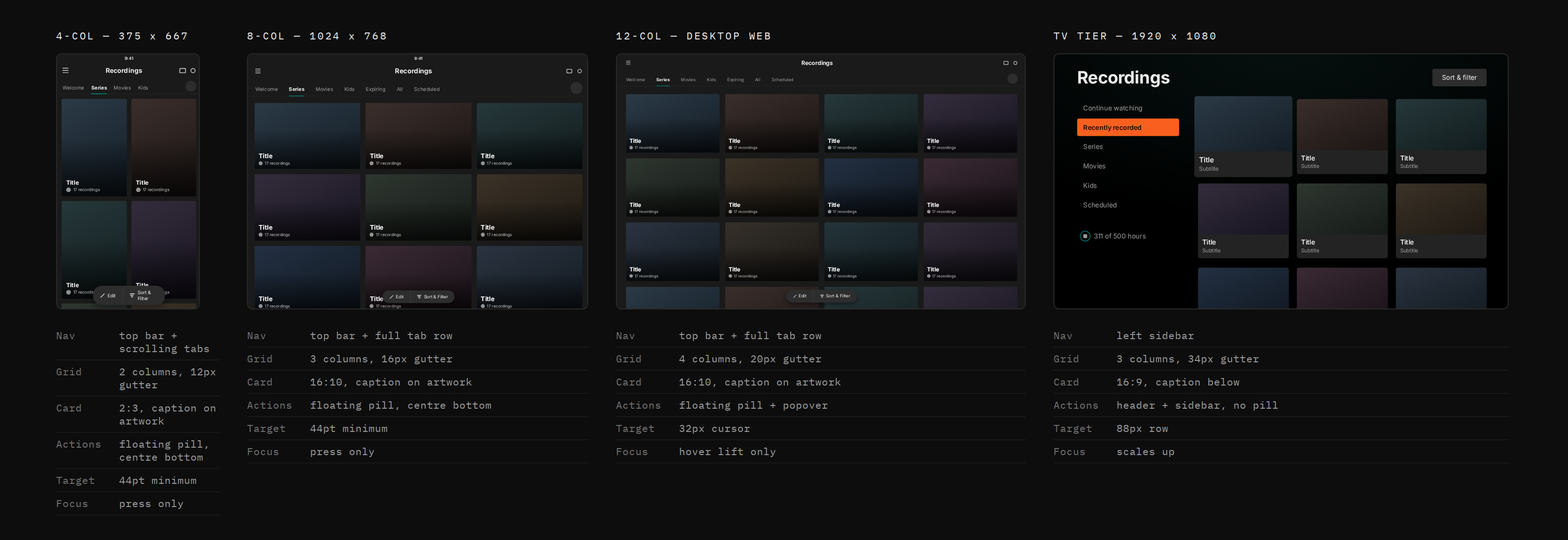
The experience is now consistent across all of them, both in look-and-feel and UX.
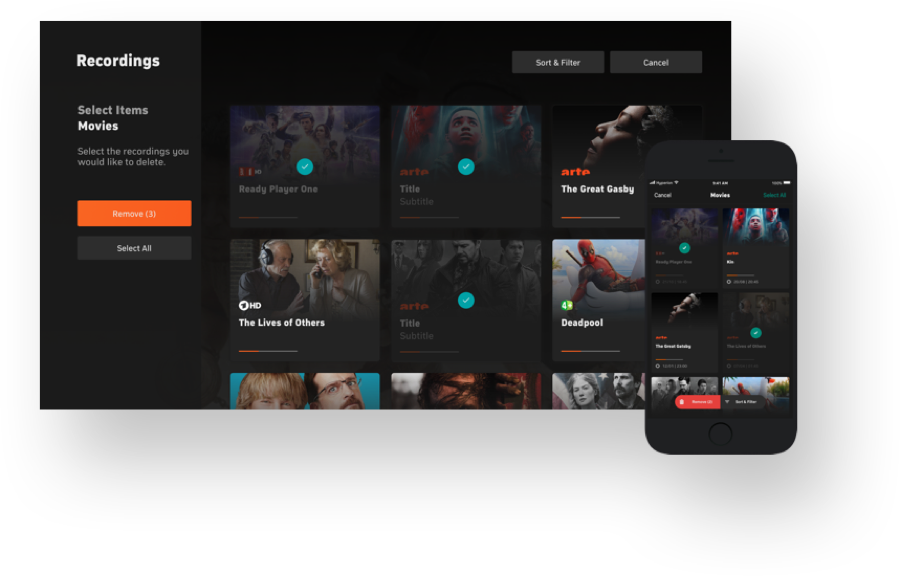
Zattoo users can record up to 500 items, and cleaning up the storage had become a hassle for many. Not anymore.
Users can now select multiple recordings and delete them at once.
We designed a new default clustering and sorting system to accommodate most use cases.
Additionally, filters and sorting can be manually set up for users who need to cluster content their own way.
From Zattoo's web language to a TV-native system
Zattoo already had a design language on web, but nothing built for the 10-foot experience: remote-first navigation, focus states, safe areas, and the coarser type and spacing TV demands. I evolved that web language into Zattoo's first TV design system, adapting existing components and building the ones TV needed from scratch.
That system is what let seven platforms ship one consistent Recordings instead of seven more one-off builds, and it outlived this project: later features shipped faster because the components already existed.
* For confidentiality, exact figures are omitted where noted
Redesigning Recordings was a stepping stone for Zattoo. Processes were successfully improved, and the relevant KPIs kept climbing after launch.
Average duration of watched recordings per eligible user — the metric the whole redesign was built to move.
Seven fragmented implementations became one consistent experience, look-and-feel and UX, across every platform.
Customer Support complaints turned into praise: "The new recording function has become really tip top. So much praise from my side." — Premium user
Shipped, then learned
The redesign set the bar for the Product Design process at Zattoo: research gathered before designing, a Design Sprint to align stakeholders, prototypes tested before building. But after releasing on the first platform, it became clear we would have benefited from more, tighter iteration cycles rather than committing the full scope up front across all seven.
Seven platforms, one page, and 500 recordings people had forgotten about. Recordings didn't need to be bigger — it needed a coherent home.